When your siding fails, it doesn't fail quietly. Moisture gets into sheathing, energy costs climb, and the interior damage that follows is always more expensive than the exterior repair that would have stopped it. Forge Siding puts licensed, manufacturer-certified crews on your property — crews who diagnose the actual problem, price it in writing, and fix it once.

What makes our operation different isn't a slogan. It's the fact that every estimate we write is line-item detailed, every project has a named lead installer accountable for the outcome, and every completed job closes with a written workmanship warranty you can actually enforce.
Our DC operation is licensed, bonded, and insured — GL and workers' comp both current, certificates available before any project starts. Not because it's optional, but because a property owner deserves protection when they invite a crew onto their building.
Every Forge Siding project closes with a signed workmanship warranty document. Not a verbal commitment — an actual document with coverage period, covered defects, and a resolution process you can hold us to. Manufacturer material warranties are registered in your name at project completion, so the coverage that came with the product stays in force.

Most siding failures start as small, quiet problems. Catching them before they reach your wall cavity changes the repair scope dramatically — and the cost even more so.
Hairline fractures look cosmetic. At arm's reach they look different — especially on fiber cement where surface spalling around impact points creates moisture entry that accelerates sheathing damage.
Drywall staining, soft spots when you press near exterior walls, or a persistent musty odor in exterior-adjacent rooms are downstream indicators. The sheathing has usually been wet for weeks before these symptoms appear.
Buckled vinyl means panels were installed too tight for the thermal range — no expansion room for seasonal movement. The deformation grows with each heat cycle and eventually opens the panel lock, creating wind and water entry points.
Exterior paint failing within two to four years of application on wood or fiber cement is almost always a back-priming failure — moisture migrates through the panel from behind and pushes the front paint off. Re-painting without addressing this repeats the cycle.
Fastener specification is the most commonly skipped installation requirement. We've documented hundreds of District of Columbia, DC properties where the original installer used bright nails on fiber cement, voiding the material warranty before the first winter.
A compromised siding system — failed housewrap, open panel joints, missed penetration caulk — creates air infiltration that significantly increases HVAC load. If your heating or cooling costs have climbed without obvious explanation, the building envelope is a legitimate first suspect.
Our District of Columbia, DC team handles the full spectrum of residential and commercial cladding work from single-panel storm repairs to complete building envelope re-siding on large multi-family properties.
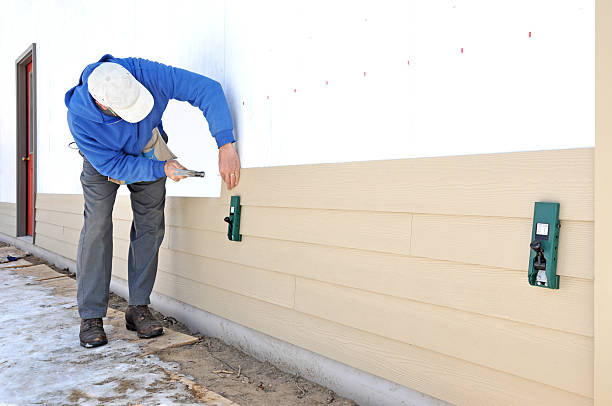
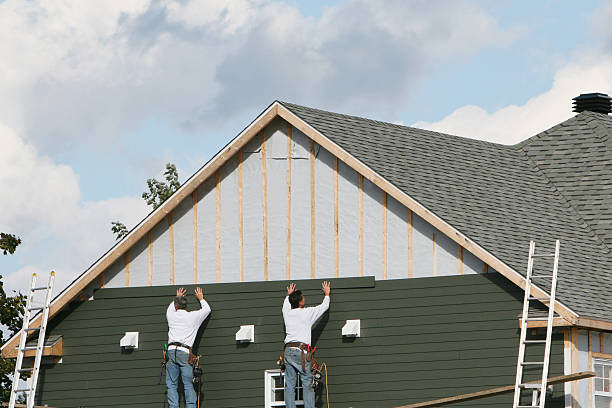
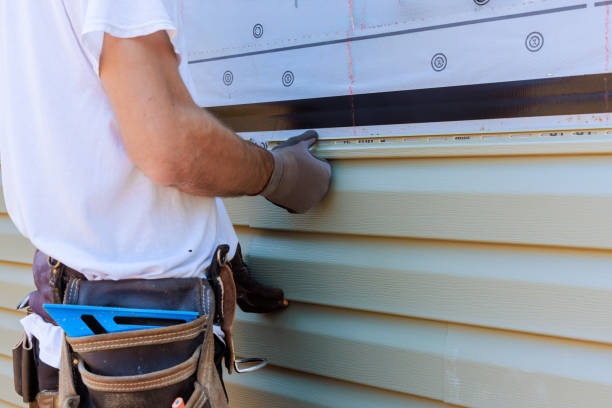
New siding installation covers the complete scope: housewrap, flashing at all penetrations, panel installation per manufacturer specification, and finishing trim at corners, windows, doors, and the roofline. We work on new construction alongside general contractors and handle full tear-off replacements on existing District of Columbia, DC homes and commercial properties. Our crews are certified on vinyl, fiber cement, engineered wood, and steel panel systems — with the documentation to keep every material warranty in force.
We also handle the complete trim system: corner posts, J-channel, soffit panels, fascia wrap, and all penetration accessories. Not as an optional add-on — as part of every installation scope, because a new siding system that terminates into failing trim defeats the purpose of the project.

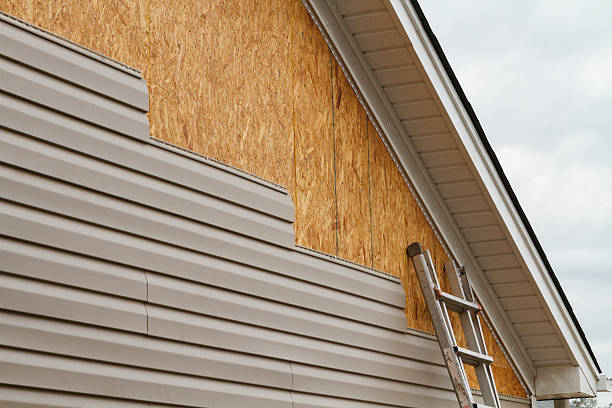
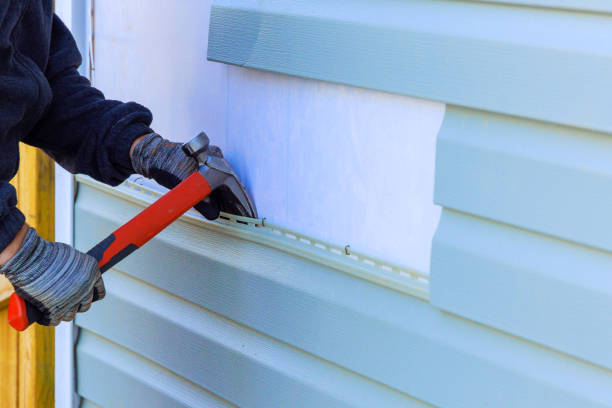
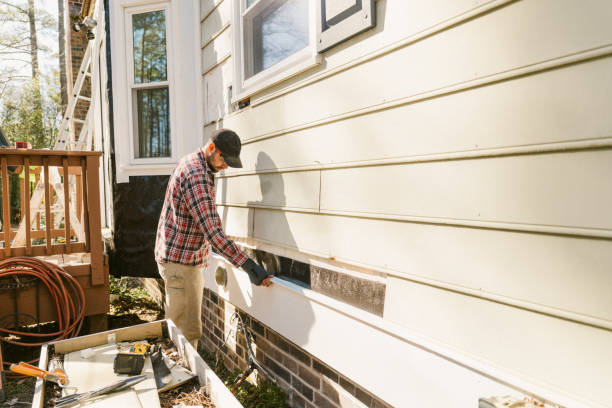
Siding repair in District of Columbia, DC covers a range that extends well beyond swapping a cracked panel: hail and wind damage after storms, impact holes from debris or vehicle contact, failed caulk joints at penetrations allowing water infiltration, loose or blown-off panels, and moisture-infiltrated substrate that requires sheathing repair before new cladding can go on. Our District of Columbia, DC repair crews carry common panel stock, a moisture meter, and caulk probe tools on every service truck — so assessment and often same-day repair happen in a single visit.
Emergency dispatch for genuine siding emergencies — missing panels with rain incoming, active moisture entry into a wall cavity, structural damage — is available around the clock. A live dispatcher answers, not an answering queue. We triage by exposure severity and send a crew based on actual risk.

Manufacturer certification matters for one concrete reason: it's the difference between a material warranty that's in force and one that's already voided before the project is complete. Our James Hardie Preferred Contractor status, for example, means the 30-year material warranty on every fiber cement project we complete is fully registered in the client's name at project close.
For commercial and multi-family projects in DC, our operation extends to HOA communities, property management portfolios, and new construction cladding for GCs who need a reliable siding subcontractor with documented quality control. Standardized per-building documentation and a single project point of contact make multi-unit work manageable for property managers.

Vinyl soffit and fascia wrap, HardieTrim boards, aluminum-capped fascia, and fiber cement trim boards are all within our scope. On replacement projects, we replace trim components that are damaged or compromised regardless of the primary panel material — because leaving failing trim behind a new siding installation creates the exact moisture entry point the new siding was supposed to eliminate.

A professional siding inspection before buying or selling a District of Columbia, DC property gives you panel-level condition documentation that general home inspectors don't produce. We assess fastener schedules, test caulk integrity at penetrations, probe sheathing moisture with calibrated meters, and deliver a priority-ranked written report with photo documentation and rough repair cost ranges. Pre-purchase inspections have identified sheathing moisture on properties where the general inspection report said the siding was "in acceptable condition."

Property managers and HOA boards working with us get a dedicated project point of contact, building-by-building scheduling documentation, and a close-out package — permit records, warranty registrations, per-building photos — formatted for board records and institutional property management systems.

There are plenty of siding contractors in DC. Here's what the ones worth hiring actually do differently.
Lump-sum estimates are the contractor's tool. Line-item estimates are the client's. We provide the latter on every project, from a single-panel repair to a full commercial re-siding contract.
Our DC crews operate from locally based dispatch — not a regional hub routing jobs to whoever's available statewide. That means faster arrival windows, familiarity with local building departments, and crews who know 's specific code requirements.
Our DC contractor license number is provided at first contact. Two minutes in the state database tells you our status, our classification, and our disciplinary history. GL and workers' comp certificates are available before work starts — not expired documents or certificates for a different company name.
Every completed project closes with a signed warranty document: coverage period, covered defects, and the resolution process — all specified in writing. Manufacturer warranties registered in your name at project completion. Not a verbal promise; a document you can file, reference, and enforce.
Staging tarps protect landscaping and driveways before demo starts. We sweep for fasteners every afternoon before the crew leaves. Debris is hauled off-site rather than sitting in a roll-off on your driveway for three weeks after the project ends.
You don't have to call us to find out where your project stands. We tell you, every day, in writing.
A predictable process consistently produces better results than a flexible one. Here's exactly what to expect.
You get a real conversation with a dispatcher who knows the product — not a scheduling app that drops your request into a queue. The site assessment is diagnostic, not just a measuring visit.
Delivered within 24 hours of the site visit. Every component — panels, trim, housewrap, fasteners, labor, permit fee — listed separately. We bring material samples to the estimate meeting and walk through the product trade-offs relevant to your District of Columbia, DC property.
Where permits are required in DC, we handle the application, filing fee, and inspection scheduling as part of standard scope. Your confirmed start date is in writing and the crew assignment is confirmed before materials are ordered.
We don't consider a surprise to be discovered after the project ends. If we find something during the project, you know about it before we act on it.
We walk every elevation with you at project completion. Every scope item verified complete. If anything isn't right, we note it and fix it before considering the project closed. Final payment collected after the walkthrough sign-off — not before.
Full replacement, line-item estimate, project finished on schedule, and a close-out package with every warranty document organized before I signed off on final payment. This is what a professional siding project actually looks like.
Overnight storm, eight panels blown off the north wall. Called at 5:45 AM. Someone actually answered. Crew on-site by 9:30, matching panels installed, wall complete before noon. I'll never use another contractor for anything on this house's exterior.
We manage a 34-unit townhome community. The per-building documentation, the building-by-building scheduling, the HOA board close-out package — these are things I'd been trying to get from contractors for years and never received until Forge Siding.
I verified the license number in the DC database before signing. Current, properly classified, no history. That two-minute check was the most useful thing I did in the entire contractor selection process.
The daily morning and afternoon updates from the lead installer were something I hadn't expected. I always knew exactly where the project stood. When the permit inspection happened, I heard about it the same day it passed.
Three bids — two lump sums and one line-item breakdown from Forge Siding. The line-item document made comparison possible in a way the other two bids didn't. When the choice becomes that clear, the decision is easy.
Forge Siding provides residential and commercial Emergency Siding Repair across the full District of Columbia, DC service area from our locally based dispatch team. We're familiar with local building codes, permit requirements, and contractor licensing standards throughout DC — no learning curve on your project, no out-of-area crew navigating unfamiliar inspectors and building departments for the first time.