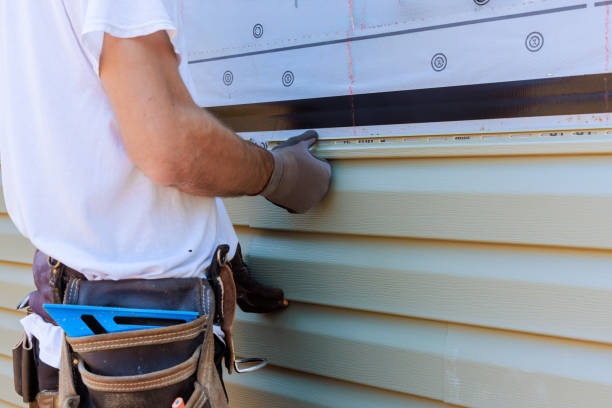
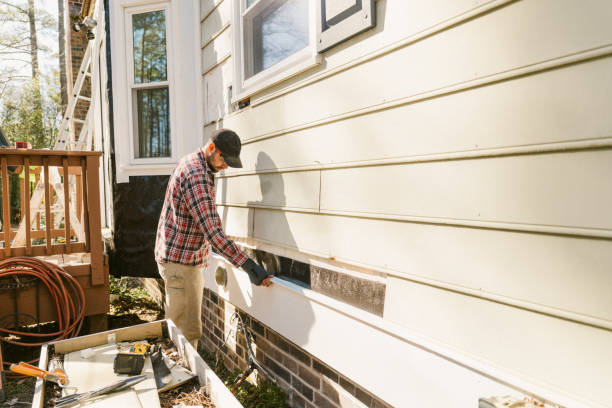
When your siding fails, it doesn't fail quietly. Moisture gets into sheathing, energy costs climb, and the interior damage that follows is always more expensive than the exterior repair that would have stopped it. Forge Siding puts licensed, manufacturer-certified crews on your Baltimore property — crews who diagnose the actual problem, price it in writing, and fix it once.

Forge Siding has been delivering Siding across Baltimore, MD for over fifteen years. Our lead installers hold manufacturer certifications on every cladding system we install — fiber cement, vinyl, engineered wood, steel — and the same crew that estimates your project executes it. We don't sub out the technical work.
Our MD operation is licensed, bonded, and insured — GL and workers' comp both current, certificates available before any project starts. Not because it's optional, but because a property owner deserves protection when they invite a crew onto their building.
Every Forge Siding project closes with a signed workmanship warranty document. Not a verbal commitment — an actual document with coverage period, covered defects, and a resolution process you can hold us to. Manufacturer material warranties are registered in your name at project completion, so the coverage that came with the product stays in force.

Most siding failures start as small, quiet problems. Catching them before they reach your wall cavity changes the repair scope dramatically — and the cost even more so.
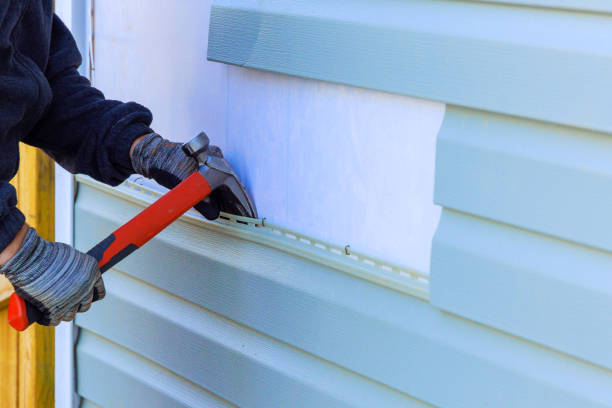
Any crack through the panel face is an active moisture entry point. Window corners and butt joints are the highest-risk locations — and the easiest to overlook until they've allowed a full season of water infiltration.
Interior moisture near windows is frequently misdiagnosed as a window problem. Failed flashing or caulk at the rough opening — a siding-system issue — is the actual source in the majority of cases we diagnose in MD.
Warped wood siding typically means unpainted back faces — differential expansion between the painted front and the raw back causes curvature that worsens with every moisture cycle.
On fiber cement specifically, field cuts that weren't back-primed at installation are the entry point. The paint fails at cut edges first and the pattern makes the cause obvious to anyone who's diagnosed it before.
Fastener specification is the most commonly skipped installation requirement. We've documented hundreds of Baltimore, MD properties where the original installer used bright nails on fiber cement, voiding the material warranty before the first winter.
A compromised siding system — failed housewrap, open panel joints, missed penetration caulk — creates air infiltration that significantly increases HVAC load. If your heating or cooling costs have climbed without obvious explanation, the building envelope is a legitimate first suspect.
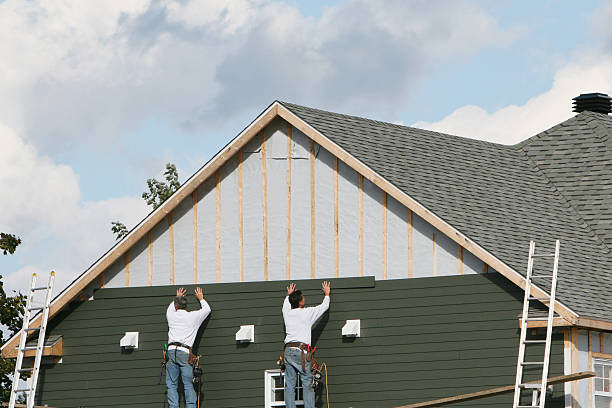
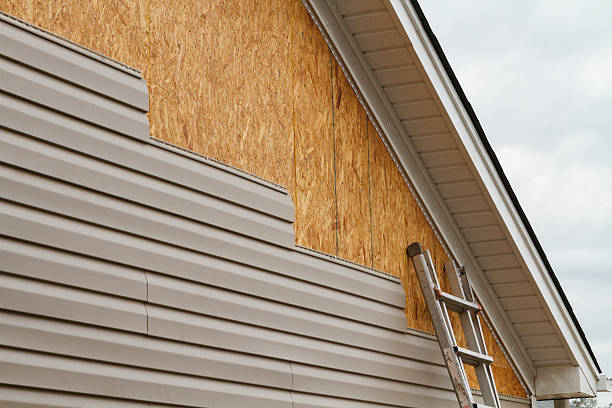
Our Baltimore, MD team handles the full spectrum of residential and commercial cladding work from single-panel storm repairs to complete building envelope re-siding on large multi-family properties.
Installation quality is the variable that separates a 15-year siding job from a 35-year one. The correct expansion gap for your MD climate, the proper back-priming of fiber cement field cuts, the housewrap integration at rough openings — these details determine long-term performance and they aren't optional on our projects.
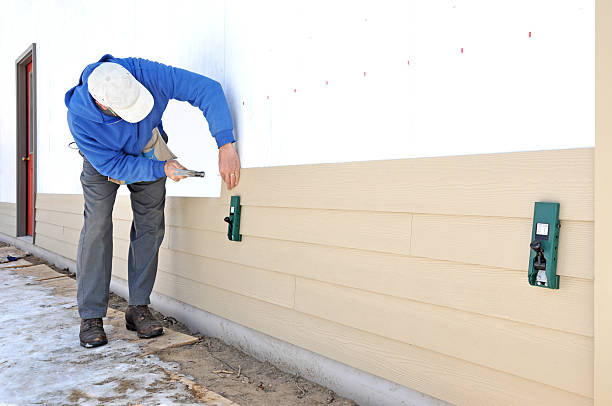
For full replacement projects, our tear-off process includes substrate inspection with a calibrated moisture meter on every exposed wall section. Sheathing damage found during demo is documented with photos and priced in a written change order before any additional work proceeds — not discovered on the final invoice.

Root cause diagnosis before any repair work is our standing process. A cracked panel that gets swapped without investigating the housewrap beneath, a caulk joint that gets re-sealed without checking sheathing moisture — these are surface patches over active problems. We find the cause first, quote the actual fix in writing, and then execute.
Emergency dispatch for genuine siding emergencies — missing panels with rain incoming, active moisture entry into a wall cavity, structural damage — is available around the clock. A live dispatcher answers, not an answering queue. We triage by exposure severity and send a crew based on actual risk.

Each cladding material has distinct installation requirements that determine whether it performs for 10 years or 40. Our Baltimore, MD crews hold certifications specific to the products they install — not one generic approach applied to every material. Fiber cement installation requires back-priming at every field cut, hot-dipped galvanized or stainless fasteners, documented fastener schedules per the manufacturer guide, and silica dust controls during cutting operations. Vinyl installation requires expansion gaps calibrated to the local temperature range in MD. Wood siding requires moisture content verification at delivery, species-appropriate nailing patterns, and end-grain sealing at every butt joint. We address each of these requirements as non-negotiable installation practice.
For commercial and multi-family projects in MD, our operation extends to HOA communities, property management portfolios, and new construction cladding for GCs who need a reliable siding subcontractor with documented quality control. Standardized per-building documentation and a single project point of contact make multi-unit work manageable for property managers.

Siding doesn't end at the wall panels. Soffit, fascia, corner posts, J-channel, window trim, door trim, and all penetration accessories are part of the building envelope — and failing trim components are among the most common moisture entry points we encounter during inspection and repair calls. Our Baltimore, MD crews handle the complete trim system as standard scope on every installation project.

Post-storm inspections document hail and wind damage at panel face level — the close-range evidence that insurance adjusters need for full-scope claim approvals. We've helped Baltimore, MD property owners recover claim settlements that significantly exceeded initial adjuster estimates by providing specific, photo-verifiable panel-count documentation rather than general damage descriptions.

Property managers and HOA boards working with us get a dedicated project point of contact, building-by-building scheduling documentation, and a close-out package — permit records, warranty registrations, per-building photos — formatted for board records and institutional property management systems.

These aren't aspirational claims. They're the operational standards our Baltimore, MD clients reference when they send us referrals. Each one is documented and verifiable.
Materials, labor, permit fees, and disposal listed separately on every estimate. You know exactly what you're paying for before signing. The estimate becomes the contract, and the final invoice reflects it — no lump-sum numbers we can pad quietly.
We don't schedule jobs we can't start within a reasonable window. Current backlog means a delay? We tell you upfront with realistic dates, not optimistic ones designed to close the sale.
An unlicensed contractor on your property creates liability exposure for you personally. License verification before signing eliminates the most common contractor fraud scenario in the Baltimore, MD market.
Every completed project closes with a signed warranty document: coverage period, covered defects, and the resolution process — all specified in writing. Manufacturer warranties registered in your name at project completion. Not a verbal promise; a document you can file, reference, and enforce.
Staging tarps protect landscaping and driveways before demo starts. We sweep for fasteners every afternoon before the crew leaves. Debris is hauled off-site rather than sitting in a roll-off on your driveway for three weeks after the project ends.
You don't have to call us to find out where your project stands. We tell you, every day, in writing.
The same documented process governs every project we take in Baltimore, MD. No mystery, no moving goalposts — you know what's happening at every stage.
You get a real conversation with a dispatcher who knows the product — not a scheduling app that drops your request into a queue. The site assessment is diagnostic, not just a measuring visit.
The estimate is a document, not a handshake. It becomes the contract, and every line item is visible before you sign. No lump-sum number to parse after the fact.
Where permits are required in MD, we handle the application, filing fee, and inspection scheduling as part of standard scope. Your confirmed start date is in writing and the crew assignment is confirmed before materials are ordered.
Morning update from the lead installer confirming the day's scope. Afternoon update reporting what was completed. Unexpected substrate conditions documented same-day with photos and a written change order — never added to the invoice without prior approval.
We walk every elevation with you at project completion. Every scope item verified complete. If anything isn't right, we note it and fix it before considering the project closed. Final payment collected after the walkthrough sign-off — not before.
The moisture meter reading at the estimate visit — before we'd agreed to anything — flagged elevated sheathing moisture behind our north wall. That diagnostic step upfront told me immediately what kind of contractor I was dealing with. The rest of the project matched that first impression exactly.
Overnight storm, eight panels blown off the north wall. Called at 5:45 AM. Someone actually answered. Crew on-site by 9:30, matching panels installed, wall complete before noon. I'll never use another contractor for anything on this house's exterior.
Pre-purchase inspection on a property we were evaluating found sheathing moisture on two elevations the general home inspector had completely missed. Used the written report to negotiate a $12,000 seller credit. The inspection paid for itself about 40 times over.
They found rotted sheathing on the west wall during tear-off. Called me within the hour, showed me the photos, issued a change order before doing anything. That's the process working exactly as it should — and it's shockingly rare in my experience with contractors.
Fiber cement installation — the back-priming at every field cut, the fastener schedule documentation, the manufacturer warranty registration. I've seen fiber cement installed by other contractors. I know what the correct process looks like. Forge Siding followed every step of it.
Three bids — two lump sums and one line-item breakdown from Forge Siding. The line-item document made comparison possible in a way the other two bids didn't. When the choice becomes that clear, the decision is easy.
Forge Siding provides residential and commercial Siding across the full Baltimore, MD service area from our locally based Baltimore dispatch team. We're familiar with local building codes, permit requirements, and contractor licensing standards throughout MD — no learning curve on your project, no out-of-area crew navigating unfamiliar inspectors and building departments for the first time.
Serving zip codes: 21218 21211 21210 21213 21212 21215 21214 21217 21216 21233 21231 21230 21239 21251 21209 21202 21206 21207 21205 21287 21201 21223 21224 21225 21226 21229 21203 21263 21264 21270 21273 21275 21278 21279 21281 21290 21297 21298 21250