Forge Siding delivers professional Siding across Fort Mill, SC with locally based crews who understand Fort Mill's specific climate conditions, permit requirements, and building codes. Not a franchise call center routing jobs to whoever's free — a licensed contractor with written credentials and a documented track record.

Forge Siding has been delivering Siding across Fort Mill, SC for over fifteen years. Our lead installers hold manufacturer certifications on every cladding system we install — fiber cement, vinyl, engineered wood, steel — and the same crew that estimates your project executes it. We don't sub out the technical work.
Our SC operation is licensed, bonded, and insured — GL and workers' comp both current, certificates available before any project starts. Not because it's optional, but because a property owner deserves protection when they invite a crew onto their building.
Every Forge Siding project closes with a signed workmanship warranty document. Not a verbal commitment — an actual document with coverage period, covered defects, and a resolution process you can hold us to. Manufacturer material warranties are registered in your name at project completion, so the coverage that came with the product stays in force.

These are the signals that experienced crews look for on every Fort Mill, SC property inspection. Missing them is how a $400 repair becomes a $4,000 wall reconstruction.
Hairline fractures look cosmetic. At arm's reach they look different — especially on fiber cement where surface spalling around impact points creates moisture entry that accelerates sheathing damage.
Interior moisture near windows is frequently misdiagnosed as a window problem. Failed flashing or caulk at the rough opening — a siding-system issue — is the actual source in the majority of cases we diagnose in SC.
Warped wood siding typically means unpainted back faces — differential expansion between the painted front and the raw back causes curvature that worsens with every moisture cycle.
On fiber cement specifically, field cuts that weren't back-primed at installation are the entry point. The paint fails at cut edges first and the pattern makes the cause obvious to anyone who's diagnosed it before.
Fastener specification is the most commonly skipped installation requirement. We've documented hundreds of Fort Mill, SC properties where the original installer used bright nails on fiber cement, voiding the material warranty before the first winter.
Wall air leakage through siding failures can account for 10–20% of annual HVAC energy consumption. Addressing the envelope often produces measurable utility savings alongside the repair value.
Our Fort Mill, SC team handles the full spectrum of residential and commercial cladding work from single-panel storm repairs to complete building envelope re-siding on large multi-family properties.
Installation quality is the variable that separates a 15-year siding job from a 35-year one. The correct expansion gap for your SC climate, the proper back-priming of fiber cement field cuts, the housewrap integration at rough openings — these details determine long-term performance and they aren't optional on our projects.
For full replacement projects, our tear-off process includes substrate inspection with a calibrated moisture meter on every exposed wall section. Sheathing damage found during demo is documented with photos and priced in a written change order before any additional work proceeds — not discovered on the final invoice.

Root cause diagnosis before any repair work is our standing process. A cracked panel that gets swapped without investigating the housewrap beneath, a caulk joint that gets re-sealed without checking sheathing moisture — these are surface patches over active problems. We find the cause first, quote the actual fix in writing, and then execute.
For insurance-related damage, we produce a panel-level photo documentation package — close-range images by elevation, written damage scope, and material specifications formatted for adjuster review. After the initial adjuster estimate comes in lower than the actual scope, our documentation has supported successful appeals on a significant number of Fort Mill, SC claims. That documentation service is included in every storm inspection at no additional charge.

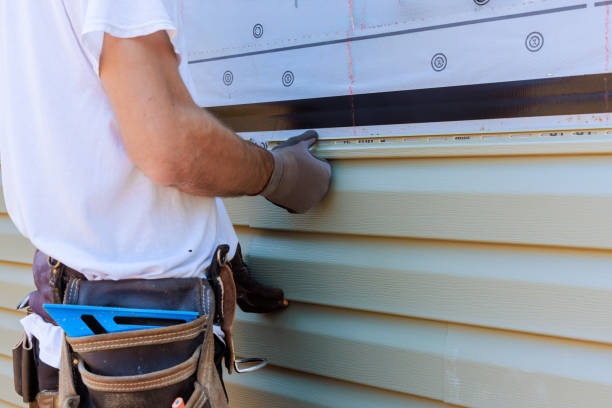
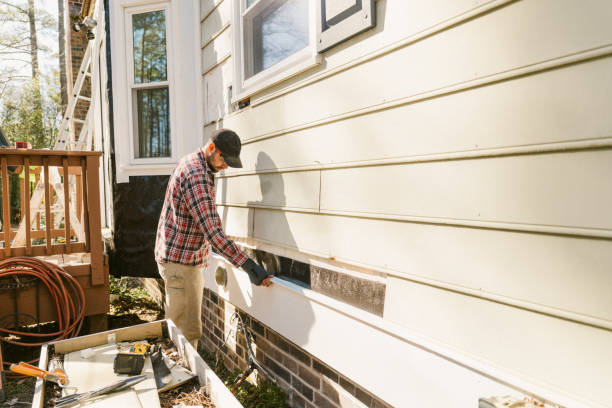
Each cladding material has distinct installation requirements that determine whether it performs for 10 years or 40. Our Fort Mill, SC crews hold certifications specific to the products they install — not one generic approach applied to every material. Fiber cement installation requires back-priming at every field cut, hot-dipped galvanized or stainless fasteners, documented fastener schedules per the manufacturer guide, and silica dust controls during cutting operations. Vinyl installation requires expansion gaps calibrated to the local temperature range in SC. Wood siding requires moisture content verification at delivery, species-appropriate nailing patterns, and end-grain sealing at every butt joint. We address each of these requirements as non-negotiable installation practice.
Beyond installation, we perform professional siding inspections — pre-purchase assessments for buyers, post-storm condition reports for insurance claims, and annual maintenance inspections for property owners who want to catch caulk failures and minor fastener movement before they become moisture damage. These inspections use calibrated pin-type and non-invasive capacitance meters for moisture assessment — tools a general home inspector doesn't carry. The written report you receive ranks deficiencies by priority and includes rough cost ranges for every item.

Siding doesn't end at the wall panels. Soffit, fascia, corner posts, J-channel, window trim, door trim, and all penetration accessories are part of the building envelope — and failing trim components are among the most common moisture entry points we encounter during inspection and repair calls. Our Fort Mill, SC crews handle the complete trim system as standard scope on every installation project.

A professional siding inspection before buying or selling a Fort Mill, SC property gives you panel-level condition documentation that general home inspectors don't produce. We assess fastener schedules, test caulk integrity at penetrations, probe sheathing moisture with calibrated meters, and deliver a priority-ranked written report with photo documentation and rough repair cost ranges. Pre-purchase inspections have identified sheathing moisture on properties where the general inspection report said the siding was "in acceptable condition."

Commercial siding in SC operates on different requirements than residential: higher fastener schedules for wind-load compliance, special inspection documentation in applicable jurisdictions, coordinated scheduling for occupied buildings, and standardized documentation for HOA board records and reserve fund planning. Our commercial crews are familiar with the permitting landscape in SC and have completed projects ranging from small townhome communities to larger multi-family re-siding contracts.

There are plenty of siding contractors in SC. Here's what the ones worth hiring actually do differently.
Materials, labor, permit fees, and disposal listed separately on every estimate. You know exactly what you're paying for before signing. The estimate becomes the contract, and the final invoice reflects it — no lump-sum numbers we can pad quietly.
Our SC crews operate from locally based dispatch — not a regional hub routing jobs to whoever's available statewide. That means faster arrival windows, familiarity with local building departments, and crews who know Fort Mill's specific code requirements.
An unlicensed contractor on your property creates liability exposure for you personally. License verification before signing eliminates the most common contractor fraud scenario in the Fort Mill, SC market.
Every completed project closes with a signed warranty document: coverage period, covered defects, and the resolution process — all specified in writing. Manufacturer warranties registered in your name at project completion. Not a verbal promise; a document you can file, reference, and enforce.
Staging tarps protect landscaping and driveways before demo starts. We sweep for fasteners every afternoon before the crew leaves. Debris is hauled off-site rather than sitting in a roll-off on your driveway for three weeks after the project ends.
You don't have to call us to find out where your project stands. We tell you, every day, in writing.
A predictable process consistently produces better results than a flexible one. Here's exactly what to expect.
You get a real conversation with a dispatcher who knows the product — not a scheduling app that drops your request into a queue. The site assessment is diagnostic, not just a measuring visit.
The estimate is a document, not a handshake. It becomes the contract, and every line item is visible before you sign. No lump-sum number to parse after the fact.
Material is ordered against the confirmed schedule. We don't stage material before it's needed and we don't start jobs with missing material. Your crew arrives on day one with everything they need.
Morning update from the lead installer confirming the day's scope. Afternoon update reporting what was completed. Unexpected substrate conditions documented same-day with photos and a written change order — never added to the invoice without prior approval.
Close-out package delivered: permit records, manufacturer warranty registrations in your name, post-project photos by elevation, and our signed workmanship warranty document. Everything in one organized file.
Full replacement, line-item estimate, project finished on schedule, and a close-out package with every warranty document organized before I signed off on final payment. This is what a professional siding project actually looks like.
Overnight storm, eight panels blown off the north wall. Called at 5:45 AM. Someone actually answered. Crew on-site by 9:30, matching panels installed, wall complete before noon. I'll never use another contractor for anything on this house's exterior.
Pre-purchase inspection on a property we were evaluating found sheathing moisture on two elevations the general home inspector had completely missed. Used the written report to negotiate a $12,000 seller credit. The inspection paid for itself about 40 times over.
I verified the license number in the SC database before signing. Current, properly classified, no history. That two-minute check was the most useful thing I did in the entire contractor selection process.
The daily morning and afternoon updates from the lead installer were something I hadn't expected. I always knew exactly where the project stood. When the permit inspection happened, I heard about it the same day it passed.
Three bids — two lump sums and one line-item breakdown from Forge Siding. The line-item document made comparison possible in a way the other two bids didn't. When the choice becomes that clear, the decision is easy.
Proximity matters for response time and for practical accountability. Our Fort Mill crews work in Fort Mill, SC communities year-round, building the inspector relationships, material supplier reliability, and local code familiarity that produce better project outcomes than out-of-market operations working from a generic spec sheet.
Currently active in: 29715 29716 29707 29708 and surrounding areas