When your siding fails, it doesn't fail quietly. Moisture gets into sheathing, energy costs climb, and the interior damage that follows is always more expensive than the exterior repair that would have stopped it. Forge Siding puts licensed, manufacturer-certified crews on your Columbia property — crews who diagnose the actual problem, price it in writing, and fix it once.

What makes our Columbia operation different isn't a slogan. It's the fact that every estimate we write is line-item detailed, every project has a named lead installer accountable for the outcome, and every completed job closes with a written workmanship warranty you can actually enforce.
We work across the full project range: single-panel storm repairs, complete whole-home re-siding, new construction cladding alongside general contractors, and commercial multi-family projects for property managers who need consistent quality and documentation across multiple buildings.
Every Forge Siding project closes with a signed workmanship warranty document. Not a verbal commitment — an actual document with coverage period, covered defects, and a resolution process you can hold us to. Manufacturer material warranties are registered in your name at project completion, so the coverage that came with the product stays in force.

Most siding failures start as small, quiet problems. Catching them before they reach your wall cavity changes the repair scope dramatically — and the cost even more so.
Hairline fractures look cosmetic. At arm's reach they look different — especially on fiber cement where surface spalling around impact points creates moisture entry that accelerates sheathing damage.
Interior moisture near windows is frequently misdiagnosed as a window problem. Failed flashing or caulk at the rough opening — a siding-system issue — is the actual source in the majority of cases we diagnose in CT.
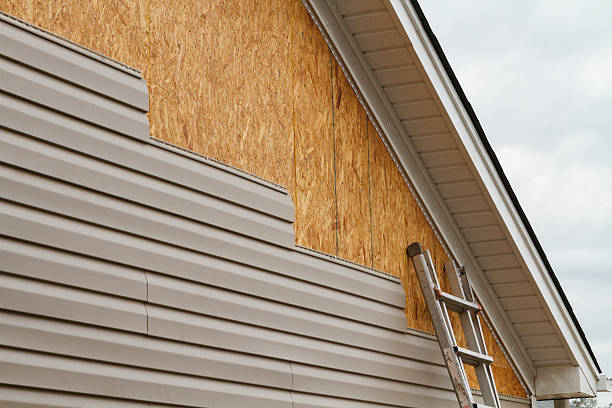
Buckled vinyl means panels were installed too tight for the thermal range — no expansion room for seasonal movement. The deformation grows with each heat cycle and eventually opens the panel lock, creating wind and water entry points.
Exterior paint failing within two to four years of application on wood or fiber cement is almost always a back-priming failure — moisture migrates through the panel from behind and pushes the front paint off. Re-painting without addressing this repeats the cycle.
Dark streaking from nailhead locations on vinyl or fiber cement means non-galvanized fasteners are corroding. As the fastener degrades, its holding strength decreases — a panel secured by a corroded nail is a panel waiting to separate in a windstorm.
A compromised siding system — failed housewrap, open panel joints, missed penetration caulk — creates air infiltration that significantly increases HVAC load. If your heating or cooling costs have climbed without obvious explanation, the building envelope is a legitimate first suspect.
Our Columbia, CT team handles the full spectrum of residential and commercial cladding work from single-panel storm repairs to complete building envelope re-siding on large multi-family properties.
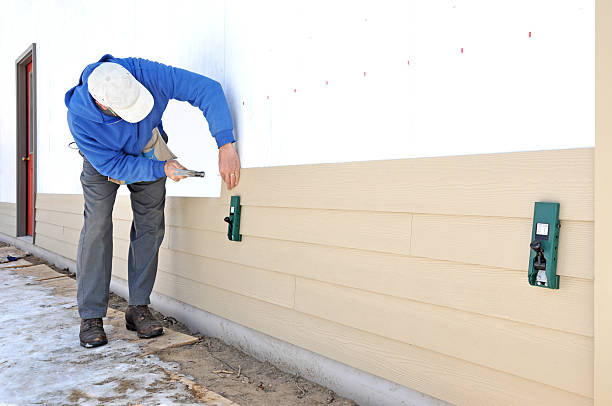
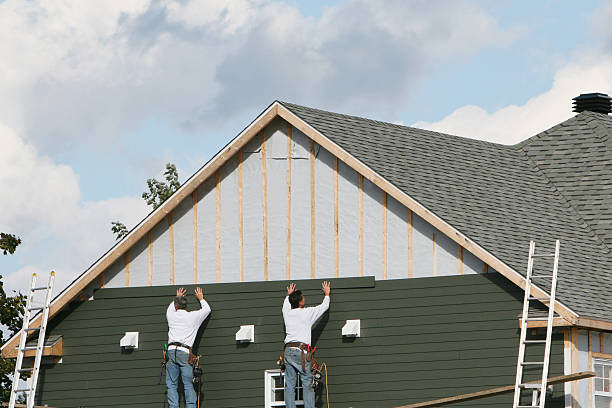
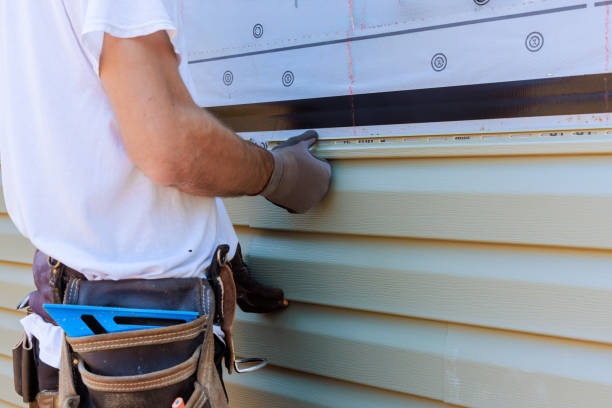
New siding installation covers the complete scope: housewrap, flashing at all penetrations, panel installation per manufacturer specification, and finishing trim at corners, windows, doors, and the roofline. We work on new construction alongside general contractors and handle full tear-off replacements on existing Columbia, CT homes and commercial properties. Our crews are certified on vinyl, fiber cement, engineered wood, and steel panel systems — with the documentation to keep every material warranty in force.
We also handle the complete trim system: corner posts, J-channel, soffit panels, fascia wrap, and all penetration accessories. Not as an optional add-on — as part of every installation scope, because a new siding system that terminates into failing trim defeats the purpose of the project.

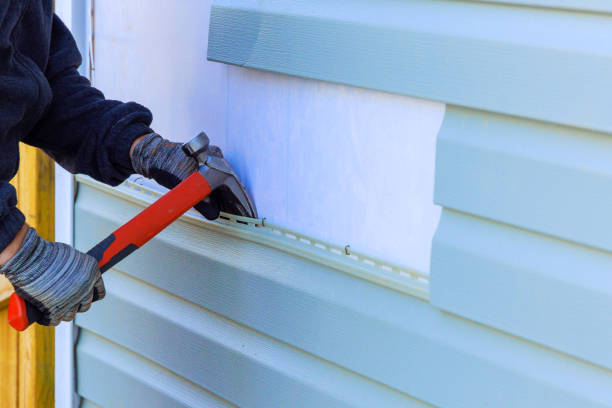
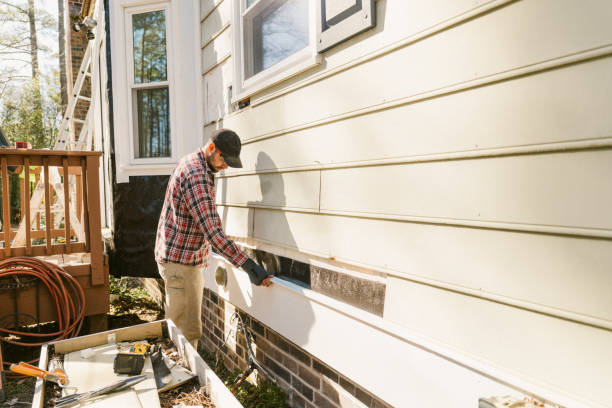
Root cause diagnosis before any repair work is our standing process. A cracked panel that gets swapped without investigating the housewrap beneath, a caulk joint that gets re-sealed without checking sheathing moisture — these are surface patches over active problems. We find the cause first, quote the actual fix in writing, and then execute.
Emergency dispatch for genuine siding emergencies — missing panels with rain incoming, active moisture entry into a wall cavity, structural damage — is available around the clock. A live dispatcher answers, not an answering queue. We triage by exposure severity and send a crew based on actual risk.

Manufacturer certification matters for one concrete reason: it's the difference between a material warranty that's in force and one that's already voided before the project is complete. Our James Hardie Preferred Contractor status, for example, means the 30-year material warranty on every fiber cement project we complete is fully registered in the client's name at project close.
Beyond installation, we perform professional siding inspections — pre-purchase assessments for buyers, post-storm condition reports for insurance claims, and annual maintenance inspections for property owners who want to catch caulk failures and minor fastener movement before they become moisture damage. These inspections use calibrated pin-type and non-invasive capacitance meters for moisture assessment — tools a general home inspector doesn't carry. The written report you receive ranks deficiencies by priority and includes rough cost ranges for every item.

Vinyl soffit and fascia wrap, HardieTrim boards, aluminum-capped fascia, and fiber cement trim boards are all within our scope. On replacement projects, we replace trim components that are damaged or compromised regardless of the primary panel material — because leaving failing trim behind a new siding installation creates the exact moisture entry point the new siding was supposed to eliminate.

Post-storm inspections document hail and wind damage at panel face level — the close-range evidence that insurance adjusters need for full-scope claim approvals. We've helped Columbia, CT property owners recover claim settlements that significantly exceeded initial adjuster estimates by providing specific, photo-verifiable panel-count documentation rather than general damage descriptions.

Commercial siding in CT operates on different requirements than residential: higher fastener schedules for wind-load compliance, special inspection documentation in applicable jurisdictions, coordinated scheduling for occupied buildings, and standardized documentation for HOA board records and reserve fund planning. Our commercial crews are familiar with the permitting landscape in CT and have completed projects ranging from small townhome communities to larger multi-family re-siding contracts.

These aren't aspirational claims. They're the operational standards our Columbia, CT clients reference when they send us referrals. Each one is documented and verifiable.
Lump-sum estimates are the contractor's tool. Line-item estimates are the client's. We provide the latter on every project, from a single-panel repair to a full commercial re-siding contract.
Our CT crews operate from locally based dispatch — not a regional hub routing jobs to whoever's available statewide. That means faster arrival windows, familiarity with local building departments, and crews who know Columbia's specific code requirements.
An unlicensed contractor on your property creates liability exposure for you personally. License verification before signing eliminates the most common contractor fraud scenario in the Columbia, CT market.
We also deliver a complete close-out package: permit records, manufacturer warranty registrations, and post-project photos organized by elevation. That file is useful for insurance renewals, property sales, and HOA records long after the project ends.
A crew that leaves a clean site every evening is a crew that respects the property they're working on. We treat cleanup as part of the daily schedule, not a last-day obligation.
You don't have to call us to find out where your project stands. We tell you, every day, in writing.
A predictable process consistently produces better results than a flexible one. Here's exactly what to expect.
You get a real conversation with a dispatcher who knows the product — not a scheduling app that drops your request into a queue. The site assessment is diagnostic, not just a measuring visit.
Delivered within 24 hours of the site visit. Every component — panels, trim, housewrap, fasteners, labor, permit fee — listed separately. We bring material samples to the estimate meeting and walk through the product trade-offs relevant to your Columbia, CT property.
Where permits are required in CT, we handle the application, filing fee, and inspection scheduling as part of standard scope. Your confirmed start date is in writing and the crew assignment is confirmed before materials are ordered.
We don't consider a surprise to be discovered after the project ends. If we find something during the project, you know about it before we act on it.
Close-out package delivered: permit records, manufacturer warranty registrations in your name, post-project photos by elevation, and our signed workmanship warranty document. Everything in one organized file.
The moisture meter reading at the estimate visit — before we'd agreed to anything — flagged elevated sheathing moisture behind our north wall. That diagnostic step upfront told me immediately what kind of contractor I was dealing with. The rest of the project matched that first impression exactly.
The insurance documentation package they produced — panel-by-panel photos, written damage scope by elevation — got our claim approved at full replacement on first review. The adjuster told us it was the most detailed storm documentation he'd seen that year.
Pre-purchase inspection on a property we were evaluating found sheathing moisture on two elevations the general home inspector had completely missed. Used the written report to negotiate a $12,000 seller credit. The inspection paid for itself about 40 times over.
I verified the license number in the CT database before signing. Current, properly classified, no history. That two-minute check was the most useful thing I did in the entire contractor selection process.
The daily morning and afternoon updates from the lead installer were something I hadn't expected. I always knew exactly where the project stood. When the permit inspection happened, I heard about it the same day it passed.
Site was clean every evening — tarps on the landscaping, fasteners swept, no debris left overnight. On the last day of the project, the yard looked better than when they'd arrived. That's a detail that matters.
Proximity matters for response time and for practical accountability. Our Columbia crews work in Columbia, CT communities year-round, building the inspector relationships, material supplier reliability, and local code familiarity that produce better project outcomes than out-of-market operations working from a generic spec sheet.
Serving zip codes: 6237