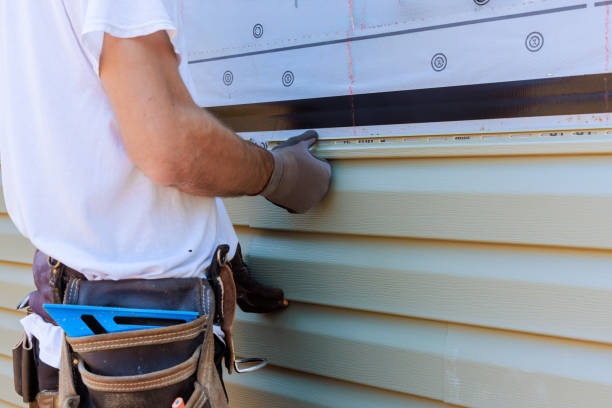
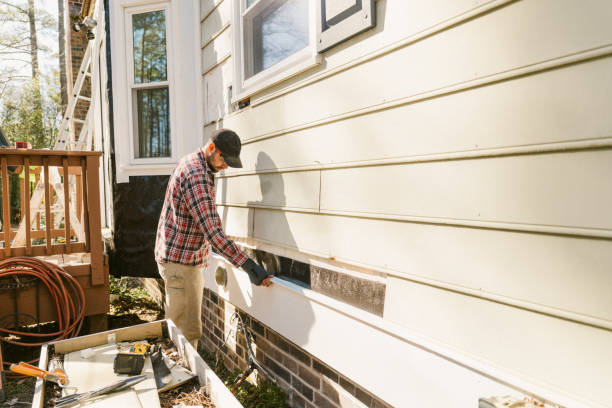
Forge Siding delivers professional Siding across Washington, DC with locally based crews who understand Washington's specific climate conditions, permit requirements, and building codes. Not a franchise call center routing jobs to whoever's free — a licensed contractor with written credentials and a documented track record.

What makes our Washington operation different isn't a slogan. It's the fact that every estimate we write is line-item detailed, every project has a named lead installer accountable for the outcome, and every completed job closes with a written workmanship warranty you can actually enforce.
Our DC operation is licensed, bonded, and insured — GL and workers' comp both current, certificates available before any project starts. Not because it's optional, but because a property owner deserves protection when they invite a crew onto their building.
We've completed projects in every climate zone Washington, DC presents — high-humidity coastal exposures, high-altitude freeze-thaw cycling, urban heat island conditions. That geographic breadth translates to practical knowledge about product selection and installation specification that out-of-market contractors working from a generic spec sheet simply don't have.

Most siding failures start as small, quiet problems. Catching them before they reach your wall cavity changes the repair scope dramatically — and the cost even more so.
Hairline fractures look cosmetic. At arm's reach they look different — especially on fiber cement where surface spalling around impact points creates moisture entry that accelerates sheathing damage.
Interior moisture near windows is frequently misdiagnosed as a window problem. Failed flashing or caulk at the rough opening — a siding-system issue — is the actual source in the majority of cases we diagnose in DC.
Warped wood siding typically means unpainted back faces — differential expansion between the painted front and the raw back causes curvature that worsens with every moisture cycle.
On fiber cement specifically, field cuts that weren't back-primed at installation are the entry point. The paint fails at cut edges first and the pattern makes the cause obvious to anyone who's diagnosed it before.
Fastener specification is the most commonly skipped installation requirement. We've documented hundreds of Washington, DC properties where the original installer used bright nails on fiber cement, voiding the material warranty before the first winter.
Wall air leakage through siding failures can account for 10–20% of annual HVAC energy consumption. Addressing the envelope often produces measurable utility savings alongside the repair value.
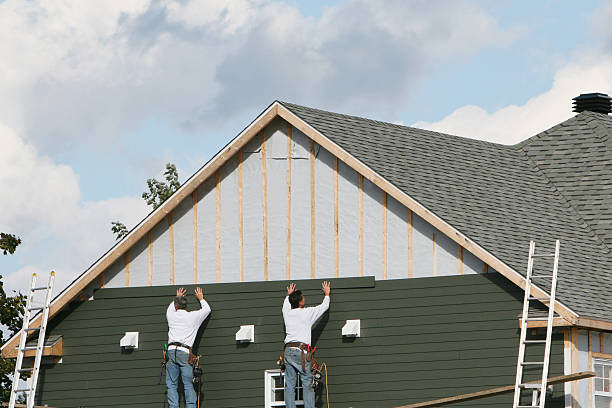
Our Washington, DC team handles the full spectrum of residential and commercial cladding work from single-panel storm repairs to complete building envelope re-siding on large multi-family properties.
Installation quality is the variable that separates a 15-year siding job from a 35-year one. The correct expansion gap for your DC climate, the proper back-priming of fiber cement field cuts, the housewrap integration at rough openings — these details determine long-term performance and they aren't optional on our projects.
We also handle the complete trim system: corner posts, J-channel, soffit panels, fascia wrap, and all penetration accessories. Not as an optional add-on — as part of every installation scope, because a new siding system that terminates into failing trim defeats the purpose of the project.

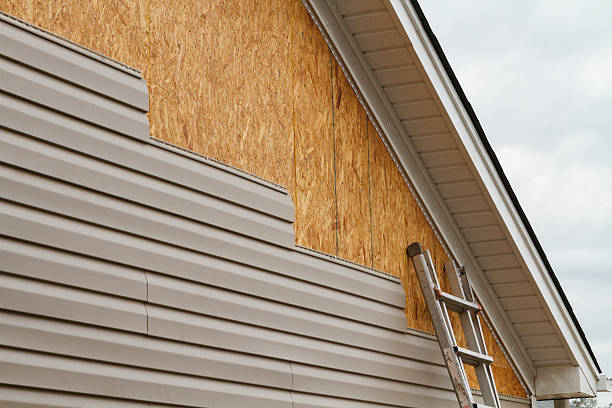
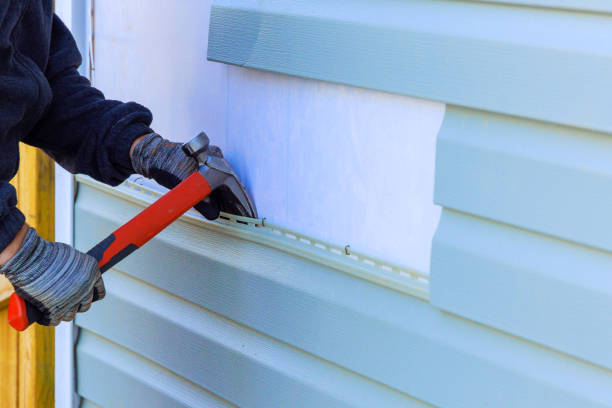
Siding repair in Washington, DC covers a range that extends well beyond swapping a cracked panel: hail and wind damage after storms, impact holes from debris or vehicle contact, failed caulk joints at penetrations allowing water infiltration, loose or blown-off panels, and moisture-infiltrated substrate that requires sheathing repair before new cladding can go on. Our Washington, DC repair crews carry common panel stock, a moisture meter, and caulk probe tools on every service truck — so assessment and often same-day repair happen in a single visit.
For insurance-related damage, we produce a panel-level photo documentation package — close-range images by elevation, written damage scope, and material specifications formatted for adjuster review. After the initial adjuster estimate comes in lower than the actual scope, our documentation has supported successful appeals on a significant number of Washington, DC claims. That documentation service is included in every storm inspection at no additional charge.

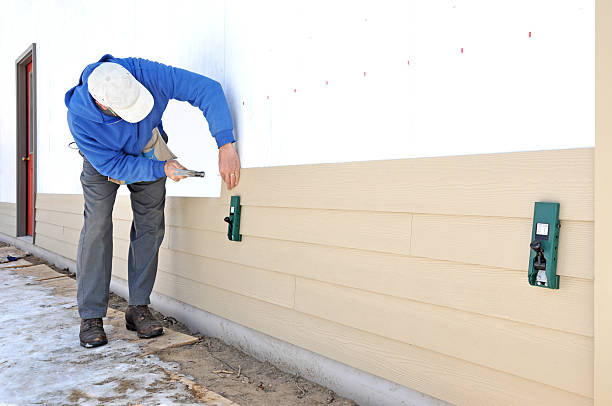
Each cladding material has distinct installation requirements that determine whether it performs for 10 years or 40. Our Washington, DC crews hold certifications specific to the products they install — not one generic approach applied to every material. Fiber cement installation requires back-priming at every field cut, hot-dipped galvanized or stainless fasteners, documented fastener schedules per the manufacturer guide, and silica dust controls during cutting operations. Vinyl installation requires expansion gaps calibrated to the local temperature range in DC. Wood siding requires moisture content verification at delivery, species-appropriate nailing patterns, and end-grain sealing at every butt joint. We address each of these requirements as non-negotiable installation practice.
Beyond installation, we perform professional siding inspections — pre-purchase assessments for buyers, post-storm condition reports for insurance claims, and annual maintenance inspections for property owners who want to catch caulk failures and minor fastener movement before they become moisture damage. These inspections use calibrated pin-type and non-invasive capacitance meters for moisture assessment — tools a general home inspector doesn't carry. The written report you receive ranks deficiencies by priority and includes rough cost ranges for every item.

Vinyl soffit and fascia wrap, HardieTrim boards, aluminum-capped fascia, and fiber cement trim boards are all within our scope. On replacement projects, we replace trim components that are damaged or compromised regardless of the primary panel material — because leaving failing trim behind a new siding installation creates the exact moisture entry point the new siding was supposed to eliminate.

A professional siding inspection before buying or selling a Washington, DC property gives you panel-level condition documentation that general home inspectors don't produce. We assess fastener schedules, test caulk integrity at penetrations, probe sheathing moisture with calibrated meters, and deliver a priority-ranked written report with photo documentation and rough repair cost ranges. Pre-purchase inspections have identified sheathing moisture on properties where the general inspection report said the siding was "in acceptable condition."

Property managers and HOA boards working with us get a dedicated project point of contact, building-by-building scheduling documentation, and a close-out package — permit records, warranty registrations, per-building photos — formatted for board records and institutional property management systems.

These aren't aspirational claims. They're the operational standards our Washington, DC clients reference when they send us referrals. Each one is documented and verifiable.
Materials, labor, permit fees, and disposal listed separately on every estimate. You know exactly what you're paying for before signing. The estimate becomes the contract, and the final invoice reflects it — no lump-sum numbers we can pad quietly.
We don't schedule jobs we can't start within a reasonable window. Current backlog means a delay? We tell you upfront with realistic dates, not optimistic ones designed to close the sale.
Our DC contractor license number is provided at first contact. Two minutes in the state database tells you our status, our classification, and our disciplinary history. GL and workers' comp certificates are available before work starts — not expired documents or certificates for a different company name.
Every completed project closes with a signed warranty document: coverage period, covered defects, and the resolution process — all specified in writing. Manufacturer warranties registered in your name at project completion. Not a verbal promise; a document you can file, reference, and enforce.
A crew that leaves a clean site every evening is a crew that respects the property they're working on. We treat cleanup as part of the daily schedule, not a last-day obligation.
The lead installer contacts you each morning to confirm the day's scope and each afternoon to report what was completed. If the project uncovers unexpected conditions — the sheathing damage that shows up during tear-off — you hear about it same-day with photos and a written change order, before we touch anything additional.
A predictable process consistently produces better results than a flexible one. Here's exactly what to expect.
Our Washington, DC dispatch team takes your call and books a free on-site assessment within 24–48 hours. We arrive with measuring tools and a moisture meter, document all wall planes and existing substrate conditions, and identify any issues before quoting.
Delivered within 24 hours of the site visit. Every component — panels, trim, housewrap, fasteners, labor, permit fee — listed separately. We bring material samples to the estimate meeting and walk through the product trade-offs relevant to your Washington, DC property.
Where permits are required in DC, we handle the application, filing fee, and inspection scheduling as part of standard scope. Your confirmed start date is in writing and the crew assignment is confirmed before materials are ordered.
Morning update from the lead installer confirming the day's scope. Afternoon update reporting what was completed. Unexpected substrate conditions documented same-day with photos and a written change order — never added to the invoice without prior approval.
We walk every elevation with you at project completion. Every scope item verified complete. If anything isn't right, we note it and fix it before considering the project closed. Final payment collected after the walkthrough sign-off — not before.
The moisture meter reading at the estimate visit — before we'd agreed to anything — flagged elevated sheathing moisture behind our north wall. That diagnostic step upfront told me immediately what kind of contractor I was dealing with. The rest of the project matched that first impression exactly.
Overnight storm, eight panels blown off the north wall. Called at 5:45 AM. Someone actually answered. Crew on-site by 9:30, matching panels installed, wall complete before noon. I'll never use another contractor for anything on this house's exterior.
Pre-purchase inspection on a property we were evaluating found sheathing moisture on two elevations the general home inspector had completely missed. Used the written report to negotiate a $12,000 seller credit. The inspection paid for itself about 40 times over.
I verified the license number in the DC database before signing. Current, properly classified, no history. That two-minute check was the most useful thing I did in the entire contractor selection process.
The daily morning and afternoon updates from the lead installer were something I hadn't expected. I always knew exactly where the project stood. When the permit inspection happened, I heard about it the same day it passed.
Site was clean every evening — tarps on the landscaping, fasteners swept, no debris left overnight. On the last day of the project, the yard looked better than when they'd arrived. That's a detail that matters.
Proximity matters for response time and for practical accountability. Our Washington crews work in Washington, DC communities year-round, building the inspector relationships, material supplier reliability, and local code familiarity that produce better project outcomes than out-of-market operations working from a generic spec sheet.
Serving zip codes: 20250 20010 20011 20012 20015 20520 20064 20418 20415 20388 20319 20020 20024 20510 20515 20591 20427 20422 20542 20540 20240 20245 20390 20005 20004 20003 20002 20001 20009 20008 20016 20317 20059 20057 20052 20017 20018 20565 20566 20560 20220 20551 20019 20230 20373 20260 20007 20006 20032 20036 20037 20204 20431 20045 20408 20535 20530 20013 20022 20026 20027 20029 20030 20033 20035 20038 20039 20040 20042 20043 20044 20047 20049 20050 20053 20055 20056 20058 20060 20061 20062 20063 20065 20066 20067 20068 20069 20070 20071 20073 20074 20075 20076 20077 20078 20080 20081 20082 20090 20091 20201 20202 20203 20206 20207 20208 20210 20211 20212 20213 20214 20215 20216 20217 20218 20219 20221 20222 20223 20224 20226 20227 20228 20229 20232 20233 20235 20237 20238 20239 20241 20242 20244 20251 20252 20254 20261 20262 20265 20266 20268 20270 20277 20289 20299 20301 20303 20306 20310 20314 20318 20330 20340 20350 20355 20370 20372 20374 20375 20376 20380 20389 20391 20392 20393 20394 20395 20398 20401 20402 20403 20404 20405 20406 20407 20410 20411 20412 20413 20414 20416 20417 20419 20420 20421 20423 20424 20425 20426 20428 20429 20433 20434 20435 20436 20437 20439 20440 20441 20442 20444 20447 20451 20453 20456 20460 20463 20468 20469 20470 20472 20500 20501 20502 20503 20504 20505 20506 20507 20508 20509 20511 20521 20522 20523 20524 20525 20526 20527 20528 20529 20531 20533 20534 20536 20537 20538 20539 20541 20543 20544 20546 20547 20548 20549 20552 20553 20554 20555 20557 20559 20570 20571 20572 20573 20575 20576 20577 20578 20579 20580 20581 20585 20586 20590 20593 20594 20597 20599 56901 56902 56904 56908 56915 56920 56933 56935 56944 56945 56950 56965 56967 56972 56998 56999